Digital divide
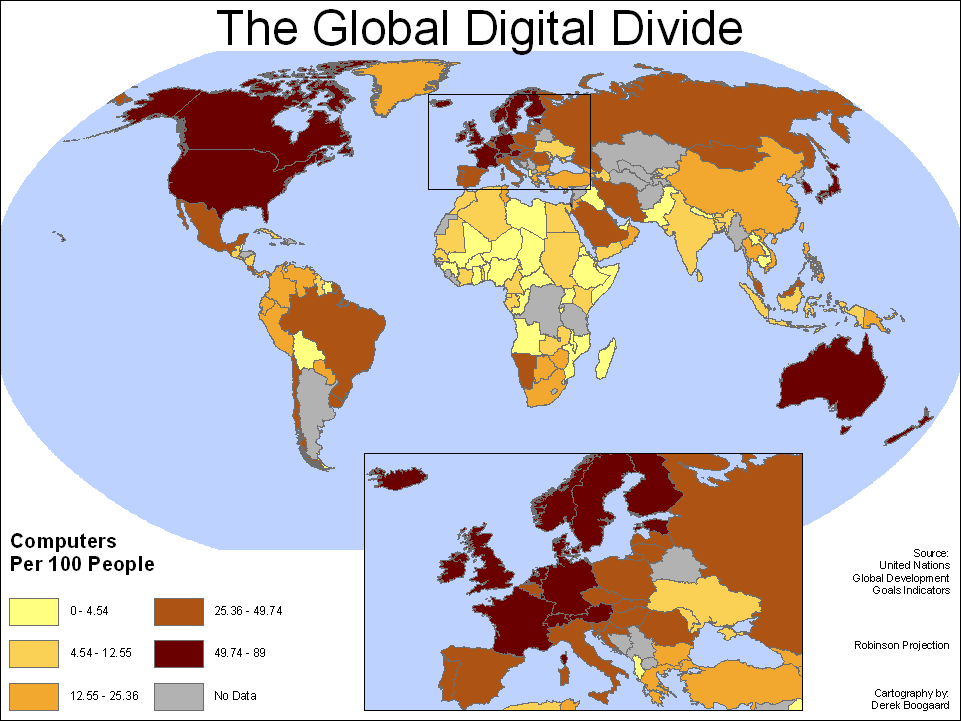 |
| Global Divide Poster taken from Google Images |
The digital divide within the globe is so vast, there are so many countries that don’t have enough computers to teach their young, in fact, and there are some countries that have probably never heard of a ‘computer’. It isn’t just computers though, the whole of technology including phones, tablets, consoles, net books etc. all these are forms of technologies that most people own or have to have in their lifestyle, what would you do without the internet?
Global Divide
This is the difference between the poor and wealthy countries around the globe that all divides it self by their technology capabilities. Think about it, New York is going to have a vast advantage on technology to say that of a country like Zimbabwe. Why? Simple, they just have more money and more of an income, whereas if you don’t have money or any good source of income how are you going to get the best of the best?
Examples of the Global Divide:
- Internet cafes
- Mobile phones
- E-Commerce
- Shipping goods
- Virtual Globes
In conclusion to all this, they say the digital divide is narrowing quite quickly, in this sense smaller countries are getting the leftovers as it where of the old computer parts and other technology for a small price or in some cases for free. This then means that they can start communicating, however they will always be one step behind as the bigger countries will always have the upper hand of having the better technology.
Local Divide
 |
| Speed Test printscreen taken from Google Images |
This is all about the different speeds of internet access over the country, and also the economic divide of the various families in the country that have less resources of those who are richer. For example, I get 3 mb of internet whereas my cousin who pays the same for his internet gets 4mb in Bath, how is that fair? There are some schools out there that simply cannot afford computers for their pupils, what impact does this do to their pupils and reputation? Those kids who do not have internet access at home who cannot complete a normal homework task because it’s set over the internet.
Advantages of the local divide:
- Classic ways of teaching stay intact
- Libraries are a lot more powerful and useful
Dis-advantages:
- School children lose out on e-learning – this can then lead to children getting behind work at school and failing – this leads to a bad school reputation
- You wouldn’t be able to enjoy the advantages of e-commerce
- You lose out on knowledge that to be honest is increasing all the time in the information world
Overall, with all opinions aside, if you do not have access to IT, you’re just going to be behind all those who do, think about it, most people these days have a computer, even my grandparents do! But without the internet you lose out on learning/shopping/investing etc. personally this is what I believe in, as IT isn’t contemporary either which makes it even harder to keep up with, and as I do 3 a – levels that involve IT, if I didn’t own a computer or have access to one, where would I be now?
Bridging the Divide
People are always trying to help out those who are lacking IT technology in their communities and homes. And this also involves school projects that send out their old computers to countries in Africa to help them learn about IT. I know that my school is involved in a similar project, sending out old computers to countries like South Africa and Africa. Recycling computers that have no use to anyone helps the environment and helps make the new better computers that get released.
Those are some forms of the act to bridge the divide, however to upkeep this people need to recycle more computer technology, and be more giving to share with the needy. If we do not help those who need it then how to you expect the whole bridging the divide is going to work, it requires motivation and money as well as just sharing.
 |
| Poster taken from Google Images |
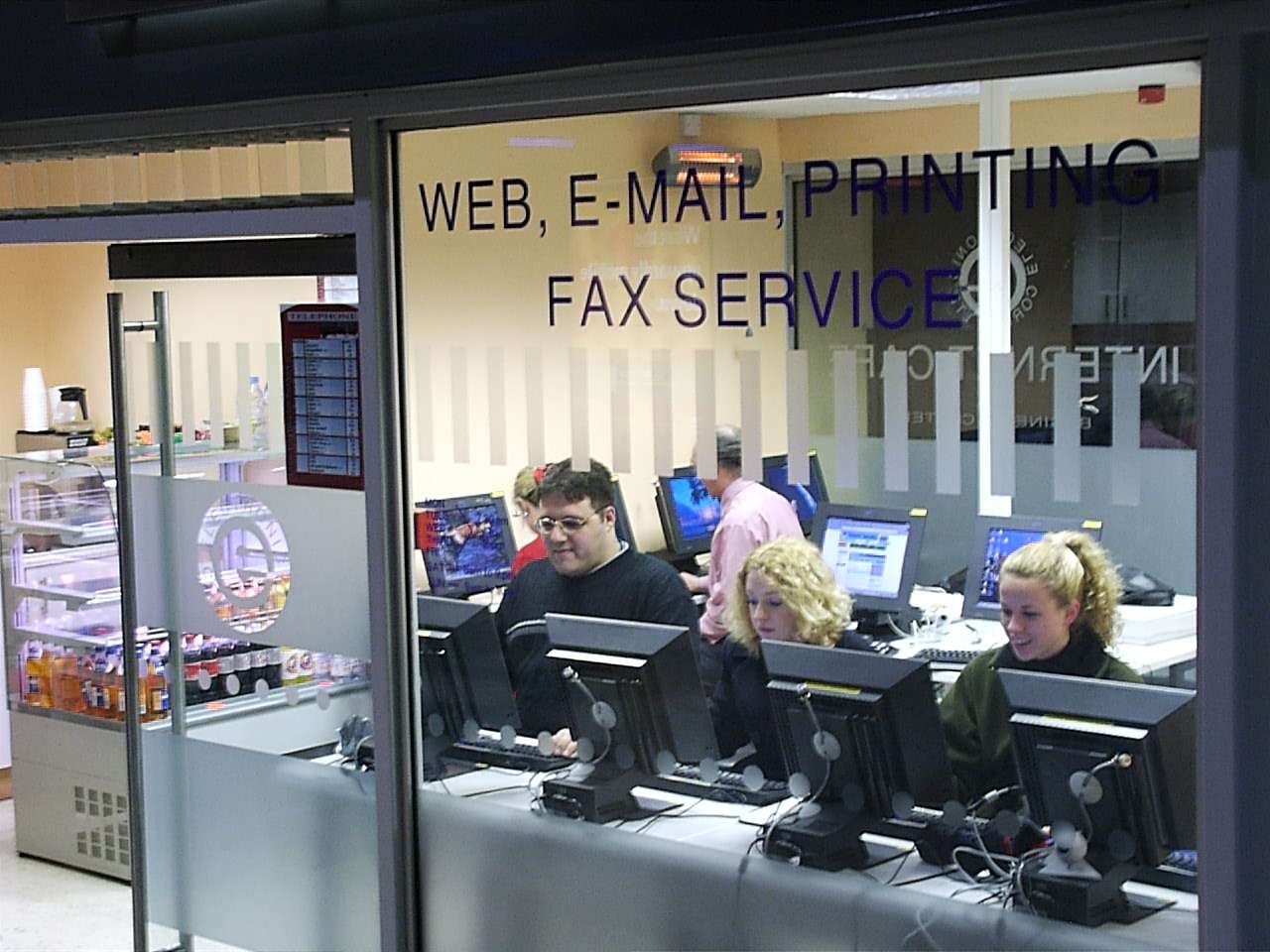 |
| Internet Cafe |
