Followers

Tuesday, 7 February 2012

Global Divide

Digital divide
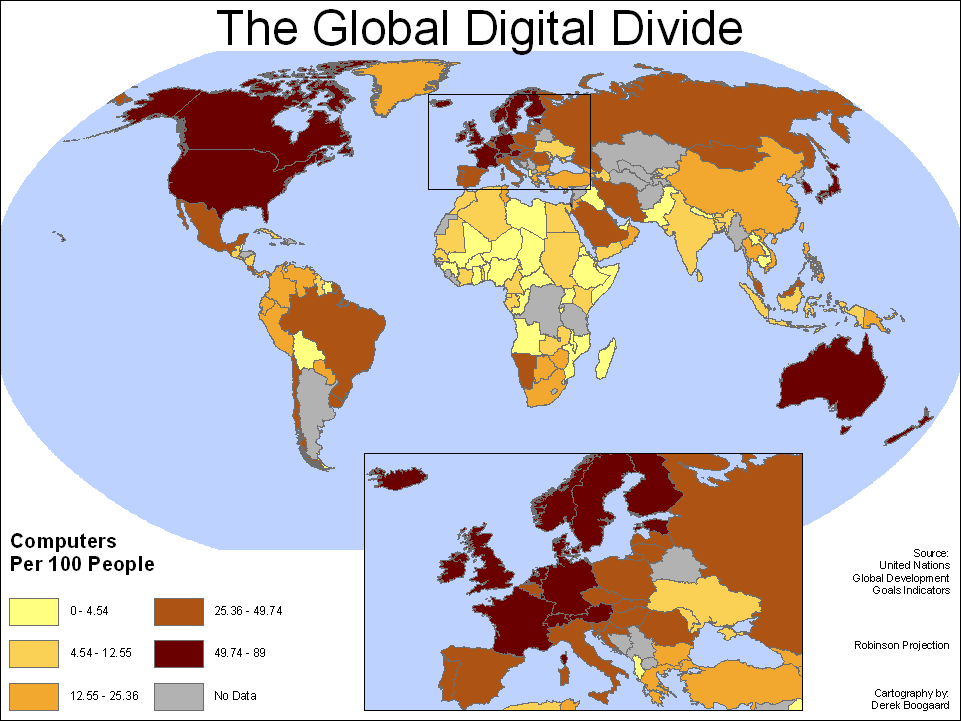
Global Divide Poster taken from Google Images
The digital divide within the globe is so vast, there are so many countries that don’t have enough computers to teach their young, in fact, and there are some countries that have probably never heard of a ‘computer’. It isn’t just computers though, the whole of technology including phones, tablets, consoles, net books etc. all these are forms of technologies that most people own or have to have in their lifestyle, what would you do without the internet?

Global Divide
This is the difference between the poor and wealthy countries around the globe that all divides it self by their technology capabilities. Think about it, New York is going to have a vast advantage on technology to say that of a country like Zimbabwe. Why? Simple, they just have more money and more of an income, whereas if you don’t have money or any good source of income how are you going to get the best of the best?
Examples of the Global Divide:
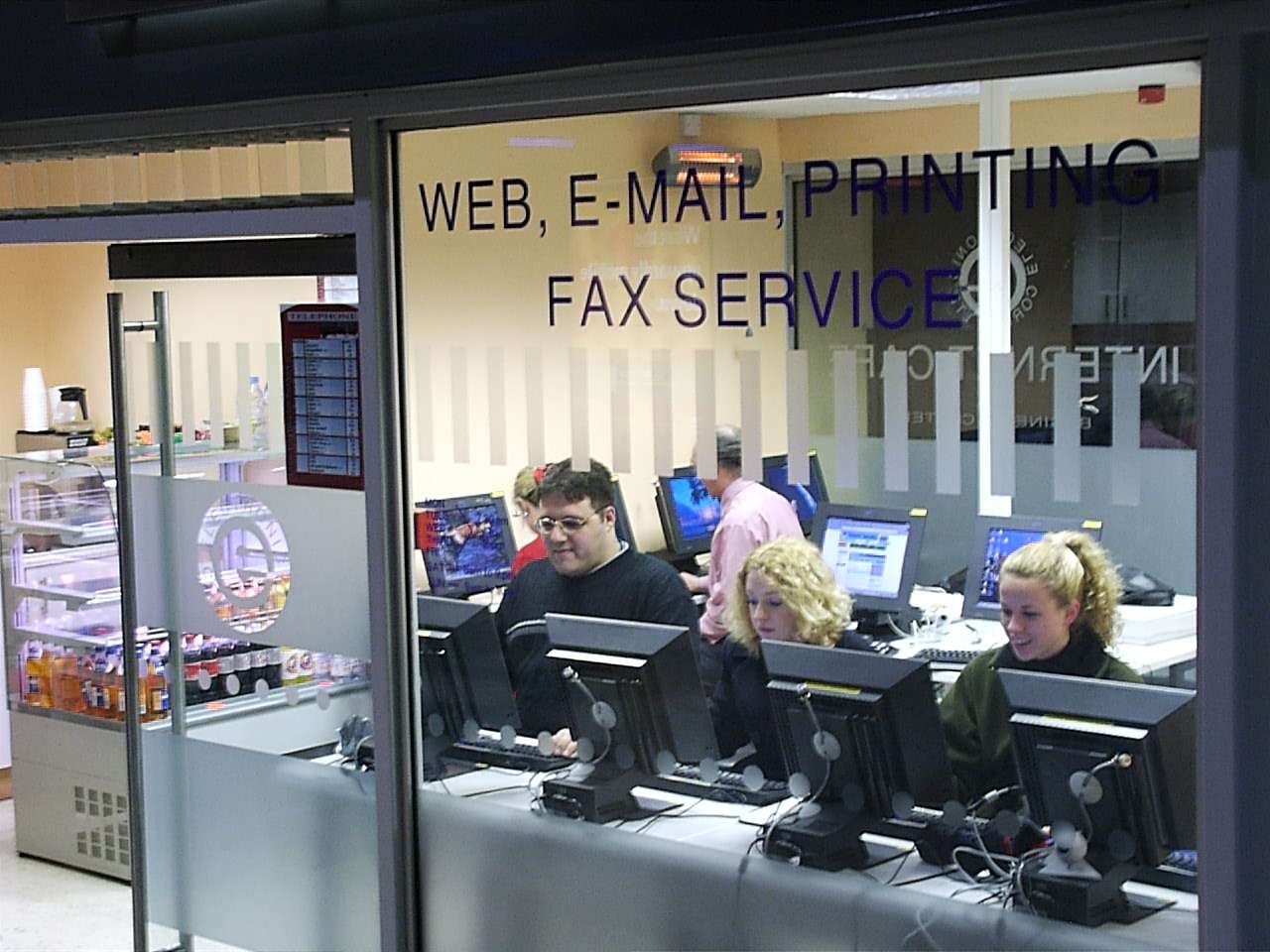
  • Internet cafes
  • Mobile phones
  • E-Commerce
  • Shipping goods
  • Virtual Globes
In conclusion to all this, they say the digital divide is narrowing quite quickly, in this sense smaller countries are getting the leftovers as it where of the old computer parts and other technology for a small price or in some cases for free. This then means that they can start communicating, however they will always be one step behind as the bigger countries will always have the upper hand of having the better technology.
Local Divide

Speed Test printscreen taken from Google Images

This is all about the different speeds of internet access over the country, and also the economic divide of the various families in the country that have less resources of those who are richer. For example, I get 3 mb of internet whereas my cousin who pays the same for his internet gets 4mb in Bath, how is that fair? There are some schools out there that simply cannot afford computers for their pupils, what impact does this do to their pupils and reputation? Those kids who do not have internet access at home who cannot complete a normal homework task because it’s set over the internet.

Advantages of the local divide:
  • Classic ways of teaching stay intact
  • Libraries are a lot more powerful and useful
Dis-advantages:
  • School children lose out on e-learning – this can then lead to children getting behind work at school and failing – this leads to a bad school reputation
  • You wouldn’t be able to enjoy the advantages of e-commerce
  • You lose out on knowledge that to be honest is increasing all the time in the information world
Overall, with all opinions aside, if you do not have access to IT, you’re just going to be behind all those who do, think about it, most people these days have a computer, even my grandparents do! But without the internet you lose out on learning/shopping/investing etc. personally this is what I believe in, as IT isn’t contemporary either which makes it even harder to keep up with, and as I do 3 a – levels that involve IT, if I didn’t own a computer or have access to one, where would I be now?
Bridging the Divide
People are always trying to help out those who are lacking IT technology in their communities and homes. And this also involves school projects that send out their old computers to countries in Africa to help them learn about IT. I know that my school is involved in a similar project, sending out old computers to countries like South Africa and Africa. Recycling computers that have no use to anyone helps the environment and helps make the new better computers that get released.
Those are some forms of the act to bridge the divide, however to upkeep this people need to recycle more computer technology, and be more giving to share with the needy. If we do not help those who need it then how to you expect the whole bridging the divide is going to work, it requires motivation and money as well as just sharing.

Poster taken from Google Images


Internet Cafe

Wednesday, 4 January 2012

How IT is used to prevent crime

Crime is unfortunately a growing problem and one of the most productive ways of dealing with it is by using IT, by doing so, as a whole we have managed to keep a 'controlled' outlook on the situation making it a lot harder for people to commit crime, and for those who do end up commiting crime to eventual get caught out! However crime has a very large boundary, I will be talking about bullying and hacking mainly, and how IT is used to thwart it from happening again.

Dissemination

Thief stealing information - taken from Google images
This is the term meant for act to disperse or the disappearance of something. This act is becoming more noticeable within the cyber world and should really be thwarted; it normally involves excessive stalking and is easily seen as a crime. Here’s a story that involves dissemination within the cyber world… The story goes as, a jealous ex boyfriend allegedly stole some nude photographs of his ex girlfriend along with her new boyfriend, he then blew them onto the internet along with personal details such as their full names/D.O.B/address, the victims actually received e-mails and phone calls from people as far as Denmark. But not only did this take place the man also was filing and updating more details about the couple when found in a police investigation.
So by reading through that story, did you think that was necessary to do to an ex girlfriend? The answer is no, however much you hated that person you are not allowed to do things like that. It is illegal and therefore is a crime.
Ways IT can be used to prevent dissemination:
  • Filters for keywords such as ‘nudity, naked & pornography’ - having filters like these will most certainly get rid of images we shouldn’t really come across.
  • 
    Printscreen taken from Google images
    
    Passwords – keeping accounts secure & safe.
  • 
    Databases – keeping all your passwords different makes it harder for a hacker to hack you, so by making a secure database you will never forget your passwords, and hopefully you’ll be the one who only knows.
  •  Trust is another big issue – only trust the very few who will keep private information kept private, if the wrong people get hold of that information you are then made vulnerable – security questions can be made on your computer to also ease this situation.
In my own experience, I have never been a victim of dissemination however, I do know of some friends that unfortunately have, it’s not a nice thing to go through, but they did deal with it mainly using IT, this means blocking certain people from social sites, new numbers, reporting to webmasters etc. all this actually cleared the situation and more importantly telling someone always helps! The only negative point is that it is very hard to erase information on the computer as people can save the information elsewhere.

Cyber Bullying
Hate mail taken from Google images
 This alone is a massive thing that unfortunately happens all over the world, and to be honest can be participated wherever you are… cyber bullying means to take part/start vicious acts to another person e.g. verbal language, putting pictures up and getting others involved. This is seen as one of the worse forms of bullying as you can’t actually get away from it, you can be a victim through a site to your mobile phone.
Ways IT can thwart cyber bullying:
  • There is no real ‘cure’ to this yet, but by blocking those who are being malicious is always a good thing to do – blocking them obviously makes it harder for them to get hold of the victim.
  • Tell someone e.g., a teacher/parent – they can report this and keep an eye on it themselves online.
  • Save the malicious content – this means the police can use this as evidence.
  • The bullies themselves could be blocked all together from the site if caught out.

In my own experience I have been in a similar situation like most people, and I did indeed follow those steps above to help me see through it, after doing this I felt really good about myself and started to trust people more and how that by doing simple things like print screening the acts could mean I could give it to people who would be able to act apon it.
'Speak up' poster taken from Google images


CCTV

CCTV in action taken from Google images
 Nowadays to catch people and to keep a safe eye over the public, we use CCTV cameras to keep up with everything, first set up in 1994. And with these linked up with IT you can see everything on the big screen, this means nothing goes unseen; well that’s the plan anyway. Although nothing is perfect, CCTV cameras are very useful to the prevention of crime.
Here are some points on how CCTV cameras help:
  • You can play back the videos whenever you want to
  • Having these cameras put out on the streets/shops means that ‘thugs’ are less likely to act as they are scared they’ll get caught – automatically making the area safer for everyone
  • The cameras are always on…
  • There’s always a guard in the CCTV operating room taking note of what is happening
  • If it is a wired CCTV camera these can only be hacked if the hacker can get to the wiring itself – this then makes it really hard as there will also be other wired cameras around the same area!
In my own opinion I think and believe that these cameras really help! There has been a lot of evidence to back my opinion and without them in this day and age the area you were to be living in would become a lot more run town, and it would be so much easier for thugs and criminals to get away with everything. CCTV is vital for all of us!

CCTV guard looking at the footage - taken from Google images